

A Place to Begin
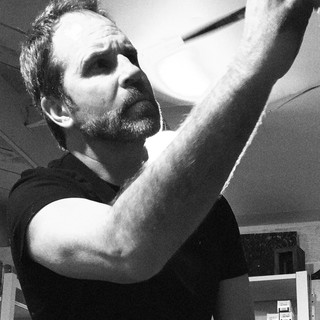

After almost forty years of painting, you'd think I'd have run out of questions by now.
Turns out, I've collected more of them than answers. And the thing is, I wouldn't have it any other way.
Whether I'm standing in front of a canvas, teaching a workshop, or exploring the working properties of a new pigment, there's almost always something that catches my attention and makes me curious.
I've learned a great deal over the years, but I'm still figuring things out. That's not a complaint. It's one of the things I enjoy most about being an artist.
I generally begin with an intention. I have an idea of where I want to go, even if I'm not entirely sure how I'll get there. The materials have their own characteristics, the process presents possibilities I hadn't considered, and the painting gradually becomes a conversation between what I intended and what I'm discovering.
That's where things get interesting.
I've spent much of my life moving between three worlds: the artist's studio, the classroom, and the fascinating world of art materials. They might seem like different pursuits, but in my experience, they're pretty closely connected. What I learn in one inevitably finds its way into the others.
In the studio, I've always been drawn to the landscape. Not so much as a place to describe, but as a source of ideas, memories, and experiences. I'm interested in what lies beneath the surface, how color, shape, texture, and the passage of time can come together to suggest something familiar without necessarily telling us exactly what we're looking at.
I often think of the landscape as a record of time. It holds the evidence of things that have happened, sometimes over millions of years, and sometimes in the blink of an eye. Painting gives me a way to explore those relationships, to take something I've observed or experienced and see where it might lead.

And then there's the paint itself.
I've spent almost thirty years working in the art materials industry, and I still find it all fascinating. Pigments have different personalities. Some are bold and assertive, others are subtle and reserved. Some cover everything in their path, while others let what's underneath shine through. Understanding those differences gives us choices, and choices give us possibilities.
But knowing how a material works is only part of the story. What happens when you put it to use is where the real learning begins. You can understand the properties of a pigment, know how it mixes and behaves, and still discover something new when you put brush to canvas.
That's one of the things I've always enjoyed about teaching.
Over the years, I've worked with artists of all ages and experience levels, from folks picking up a brush for the first time to accomplished painters looking to explore something new. And one thing I've learned is that curiosity doesn't depend much on experience. Some of the best questions come from beginners who haven't yet learned what they're supposed to know.
I try to approach teaching the same way I approach painting: with a clear intention, a willingness to explore, and an understanding that there's often more than one way to get somewhere.
I don't believe good teaching is simply about having all the answers. It's about helping people understand enough to begin asking better questions of their own. Sometimes that means explaining a complicated idea in plain language. Sometimes it means demonstrating a technique. And sometimes it means stepping aside and letting someone discover what a material can do.
I've often said that one of the most valuable things we can give ourselves as artists is permission to ask more questions.
That idea has stayed with me, both in the classroom and in my own studio.
In recent years, I've had the opportunity to write a series of articles for Royal Talens exploring painting materials, art history, and the creative process. What started as a way to share some practical knowledge became something I enjoyed more than I expected. A question about a particular pigment might lead to an exploration of how artists have used color throughout history. A discussion about a painting technique might open into something larger about perception, expression, or the choices we make as artists.
And somewhere along the way, I was reminded how much I enjoy writing.
Which brings me to Notes from the Studio.
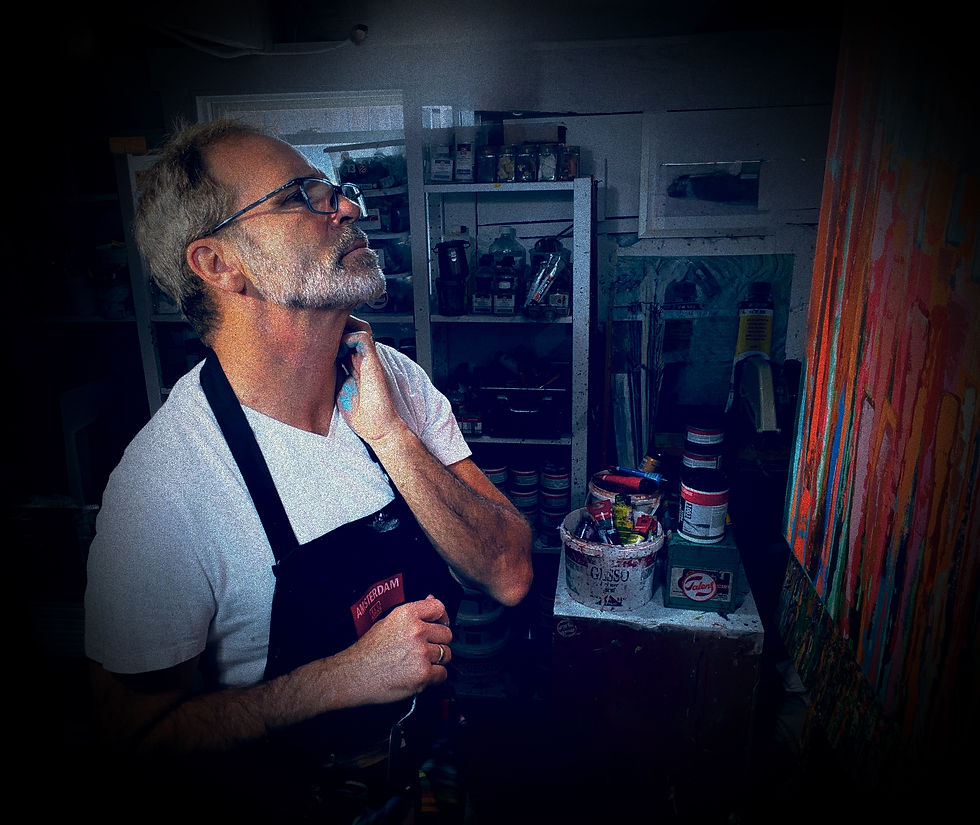
I've been thinking for some time about creating a place where I could bring these interests together. Somewhere to share what I'm working on in the studio, explore materials and techniques, revisit artists and ideas that have influenced me, and follow the occasional question just to see where it goes.
Some of what you'll find here will be practical. Some will be personal. There will be observations about painting, explorations of materials, a little art history, and probably a few things that don't fit neatly into any category.
I'm not setting out to write a textbook, and I certainly don't expect to have the final word on anything. I'd rather think of this as an ongoing conversation about making art, understanding materials, and staying curious.
After all these years, I still look forward to walking into the studio and seeing what the day might bring. I usually have a plan, but I also know that the best part of painting often comes from discovering something I hadn't anticipated.
There's always another question worth asking, another idea worth exploring, and something new to learn.
Seems like as good a place as any to begin.
Comments